How to Find Your Foundation Shade Without Guesswork, Panic, or Orange Jawlines
Few beauty moments feel as quietly defeating as stepping into daylight and realizing your foundation does not match your neck. The lighting in the store was flattering. The undertone seemed correct under warm bulbs. The salesperson nodded reassuringly.
The wrong foundation shade is not always dramatically wrong. Sometimes it is subtly too pink. Slightly too yellow. A fraction too deep. Those small discrepancies are what make shade matching feel mysterious.
Learning how to find your foundation shade is not about memorizing brand charts or trusting online quizzes blindly. It is about understanding undertones, depth, lighting, and how foundation interacts with the rest of your complexion.
When you approach shade matching strategically rather than emotionally, the process becomes much more predictable.
Why Foundation Shade Matching Feels So Complicated
Foundation sits at the intersection of art and science. It must match your skin depth, complement your undertone, blend into your neck, and behave consistently in different lighting conditions.
Complicating matters further, brands do not standardize shade naming. One brand’s “Neutral Beige” may lean warm, while another’s leans cool. A shade labeled “Warm” may contain more golden pigment than you expect.
Additionally, your skin tone is not static. It changes slightly with seasons, sun exposure, and even hormonal shifts. Many people have subtle variation between their face and neck, especially if they use active skincare products that brighten or exfoliate.
The goal of learning how to find your foundation shade is not to achieve mathematical precision. It is to achieve visual harmony.
Step One: Identify Your Depth Correctly
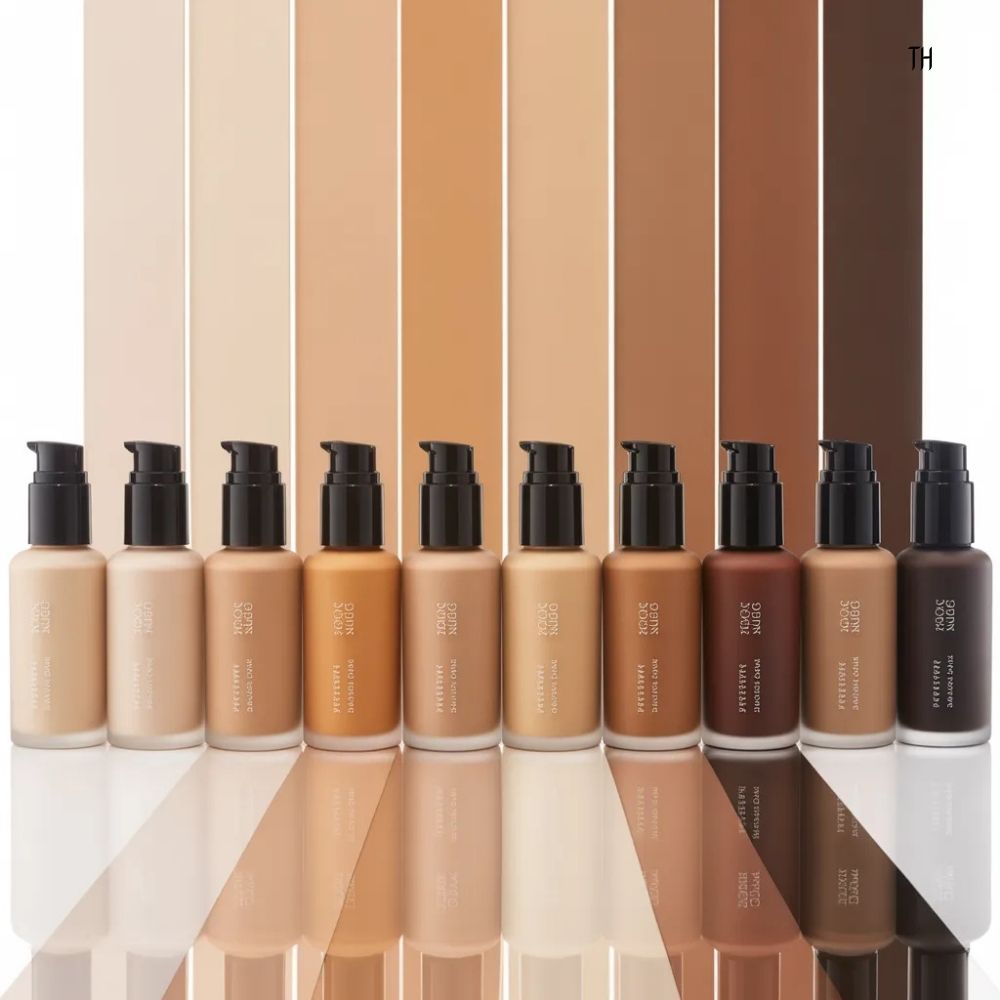
Before focusing on undertone, determine your overall depth. Depth refers to how light or deep your skin tone is.
A common mistake when trying to find your foundation shade is choosing a color based on how you want your skin to look rather than how it actually looks. Selecting a shade too light in pursuit of brightness often creates a chalky effect. Choosing one too deep in pursuit of warmth can create an artificial contrast.
The easiest way to determine depth is to compare your bare skin to a range of swatches along your jawline in natural light. Focus less on the label and more on which shade disappears most seamlessly into both your face and neck. The correct depth will not look dramatic. It will look quiet.
Step Two: Understand Your Undertone
Undertone is the subtle hue beneath your skin’s surface. It remains relatively consistent regardless of sun exposure. Most undertones fall into three broad categories:
- Cool undertones lean pink, red, or bluish.
- Warm undertones lean golden, peachy, or yellow.
- Neutral undertones sit between warm and cool.
Understanding your undertone is essential when learning how to find your foundation shade, because depth without undertone alignment often results in a mismatched finish.
A Reliable Undertone Test
Instead of relying on the classic “vein test,” which can be misleading, observe how your skin reacts to jewelry and color.
If silver jewelry consistently looks more natural against your skin, you may lean cool. If gold enhances your complexion more, you may lean warm. If both work equally well, you likely sit in neutral territory.
Another approach involves examining how your skin reacts to sunlight. Warm undertones often tan easily. Cool undertones may burn more readily. Neutral undertones may experience a combination of both.
These indicators are guides, not rules. Ultimately, visual testing remains the most reliable method.
Step Three: Test Foundation Along the Jawline
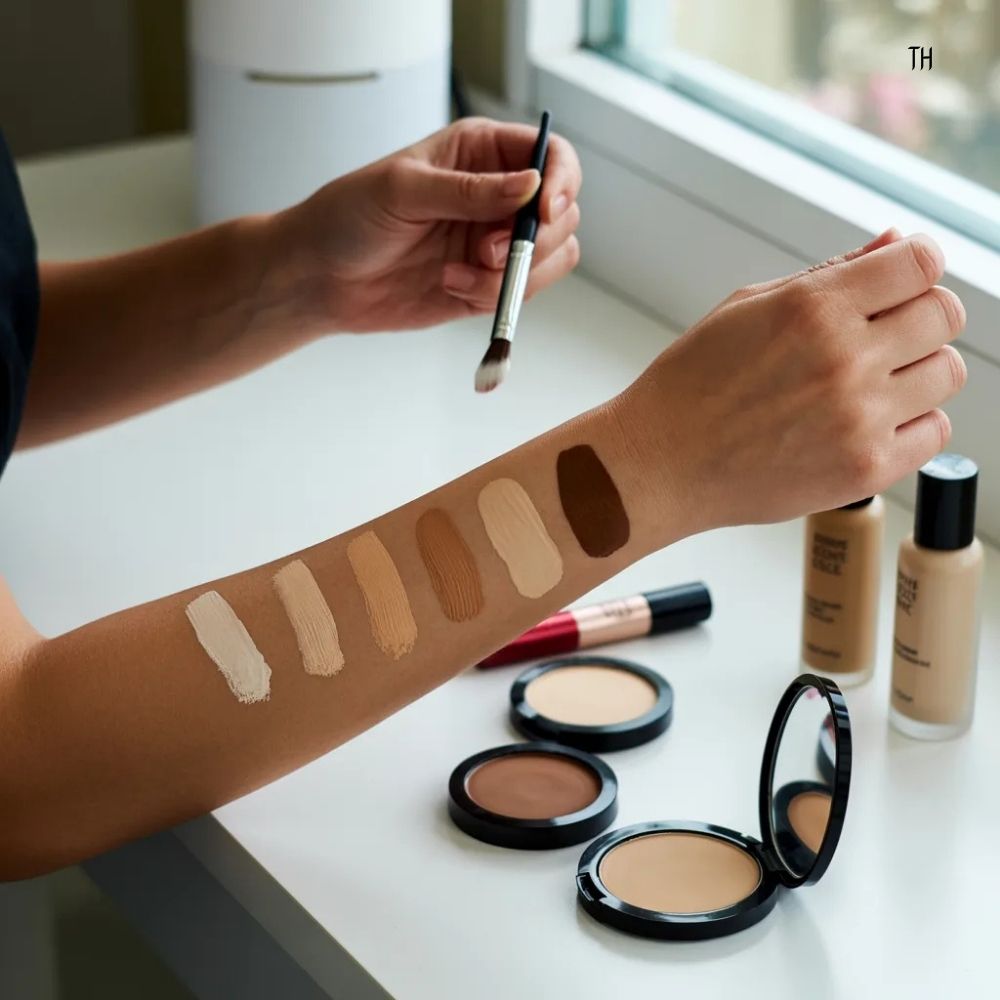
Testing foundation on the wrist is almost always inaccurate. The wrist rarely matches the face or neck in tone.
Instead, apply small vertical stripes of two or three candidate shades along the jawline extending slightly onto the neck. Blend gently and observe which shade disappears most naturally.
Wait several minutes before deciding. Some foundations oxidize, meaning they deepen slightly as they interact with air and your skin’s oils. The right foundation shade will not create a visible line between face and neck. It should create continuity.
Step Four: Evaluate in Multiple Lighting Conditions
Store lighting is rarely neutral. Warm bulbs can exaggerate yellow tones. Cool fluorescent lights can mute warmth.
After testing, step outside if possible. Natural daylight provides the most honest assessment. If you are ordering online, test your foundation shade near a window during the day.
A foundation shade that looks correct indoors but orange outdoors likely contains too much warmth. One that looks flat outdoors may be too cool. Learning how to find your foundation shade requires evaluating it where you will actually wear it.
Step Five: Account for Your Neck and Chest
Your face may be slightly lighter or more red than your neck due to skincare products or sun exposure. When deciding between two close shades, prioritize matching your neck. Foundation that matches your neck ensures that your complexion appears cohesive without requiring heavy blending downwards.
If your face is noticeably lighter than your neck due to exfoliation or sun protection, matching the neck prevents an artificial mask effect. Harmony is more flattering than brightness.
Seasonal Adjustments Matter
Many people require two foundation shades throughout the year. One slightly lighter for winter. One slightly deeper for summer.
Instead of forcing a single shade to perform year-round, consider mixing two shades during transitional seasons. Mixing allows subtle customization and often produces a more accurate match than relying on one formula alone.
Understanding this flexibility removes pressure from finding one “perfect” shade.
What to Do If You Bought the Wrong Shade
Even with careful testing, mistakes happen. The wrong foundation shade is not a permanent loss.
If a foundation is slightly too light, adding a liquid bronzer or mixing with a deeper shade can correct it. If it is slightly too deep, blending with a lighter foundation or moisturizer can soften intensity.
If the undertone is incorrect, subtle color correctors can adjust balance. A touch of green can counteract excess redness in a too-pink foundation. A drop of blue mixer can neutralize excessive warmth.
Common Shade Matching Mistakes
One of the most common errors when learning how to find your foundation shade is over-blending during testing. Blending too aggressively can disguise mismatches temporarily.
Another mistake is relying solely on online shade finders without understanding undertones. Algorithms provide guidance but cannot assess lighting conditions or oxidation.
Finally, chasing trend aesthetics can distort shade choice. Matte finishes may appear lighter. Dewy finishes may appear deeper. Always evaluate color independently of finish.
Helpful Products for Shade Matching
While technique is primary, a few tools improve accuracy. A small handheld mirror used in natural light allows more precise evaluation than a compact mirror under store lighting.
A foundation mixer such as the LA Girl Pro Color Foundation Mixing Pigment offers flexibility for adjusting undertones subtly without purchasing an entirely new bottle.
For those who prefer professional assistance, brands like Fenty Beauty and NARS provide extensive shade ranges categorized clearly by undertone, making initial narrowing easier. Having the right range increases the likelihood of success.
How to Know You Found the Right Shade
The correct foundation shade does not draw attention to itself. It should look like improved skin, not painted skin. When you tilt your face side to side, there should be no visible boundary between foundation and bare skin.
When photographed in natural light, your complexion should appear consistent from forehead to collarbone. The best foundation shade feels invisible.
Final Thoughts
Learning how to find your foundation shade is less about luck and more about structure. Identify depth accurately. Understand undertone. Test along the jawline. Evaluate in natural light. Consider seasonal variation.
When approached thoughtfully, shade matching becomes a repeatable process rather than a gamble.
The right foundation shade does not transform you into someone else. It aligns with what is already there. And alignment, rather than alteration, is what makes foundation look truly effortless.