Why the Ice Water Trick for Morning Puffiness Still Works and When It Doesn’t
There is a particular version of your face that exists between sleep and coffee. Your features feel softer. Your under-eyes look heavier. Your cheekbones appear less defined than they did the night before.
Nothing is dramatically wrong, yet something feels slightly inflated, as though the night added a thin layer of fluid you did not authorize. Morning puffiness is not cosmetic failure. It is fluid dynamics.
The body does not stop moving when you sleep, but it does slow down. Circulation shifts. Lymphatic drainage decreases. Hormones fluctuate. Sodium and stress influence retention. When you wake up, gravity has not yet fully reasserted control.
This is why the ice water trick for morning puffiness continues to circulate through beauty culture year after year. It is simple, almost primitive, yet physiologically sound. It does not promise transformation. It offers redistribution.
Why Morning Puffiness Happens in the First Place
Before you decide whether the ice water trick for morning puffiness deserves a place in your routine, it helps to understand the mechanics.
When you lie horizontally for several hours, fluid that normally settles in your lower body redistributes upward. The lymphatic system, which relies heavily on muscle movement and gravity to drain excess fluid, becomes less efficient during prolonged stillness.
If you ate a sodium-heavy dinner, consumed alcohol, slept poorly, or experienced hormonal shifts, your body may retain additional water overnight. Cortisol levels, which influence inflammation and fluid balance, can also fluctuate depending on stress and sleep quality.
The result is temporary edema, most visible in areas with thinner skin and looser connective tissue, particularly under the eyes and along the jawline. Morning puffiness is often not fat. It is fluid. The distinction matters.
What Cold Actually Does to the Skin
The ice water trick for morning puffiness works because cold exposure creates vasoconstriction. When blood vessels narrow temporarily, less fluid accumulates in superficial tissue.
Cold also stimulates a rebound effect. Once the skin rewarms, circulation increases. This expansion and contraction sequence improves microcirculation and encourages lymphatic movement.
The effect is not permanent tightening. It is temporary reduction of swelling combined with a subtle stimulation of blood flow. Cold exposure also reduces inflammation markers at the surface level. If your puffiness is partly related to irritation or poor sleep, the calming effect of cold can visually soften redness.
In short, the ice water trick works because your vascular system responds predictably to temperature.
The Classic Ice Water Trick for Morning Puffiness
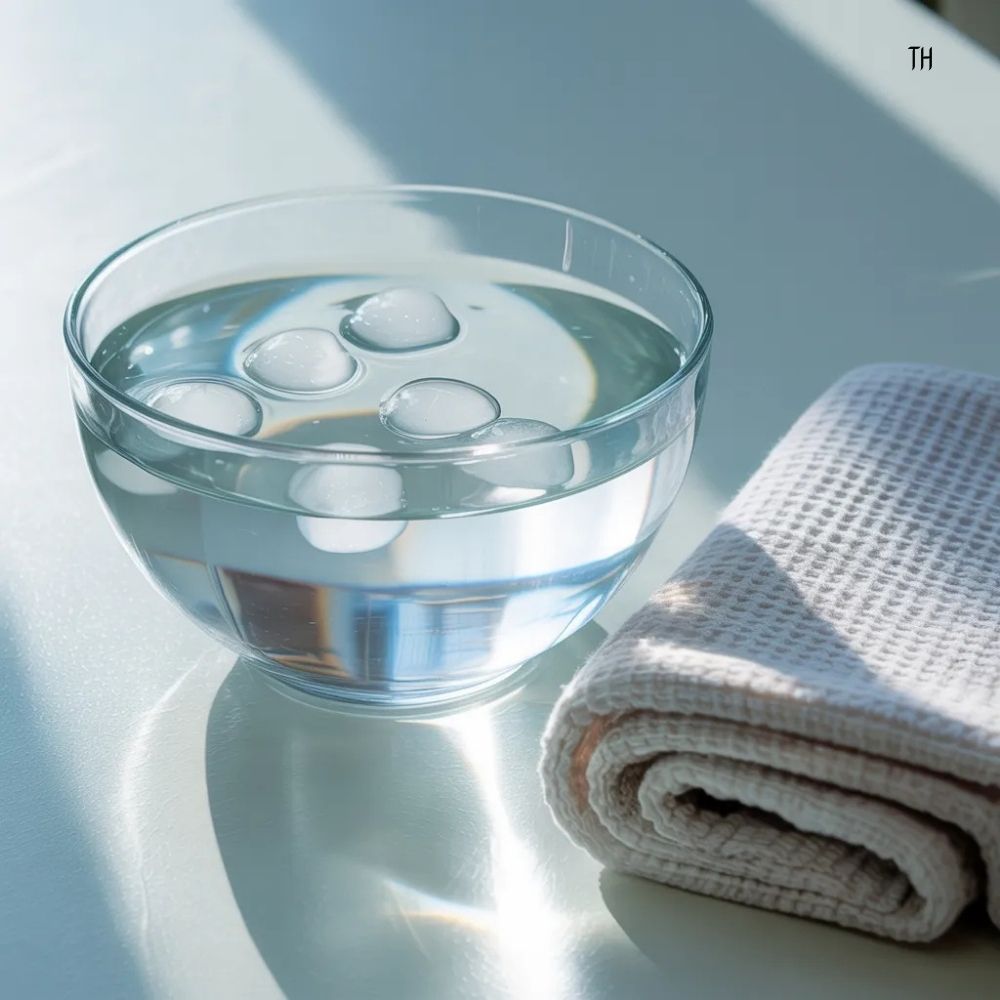
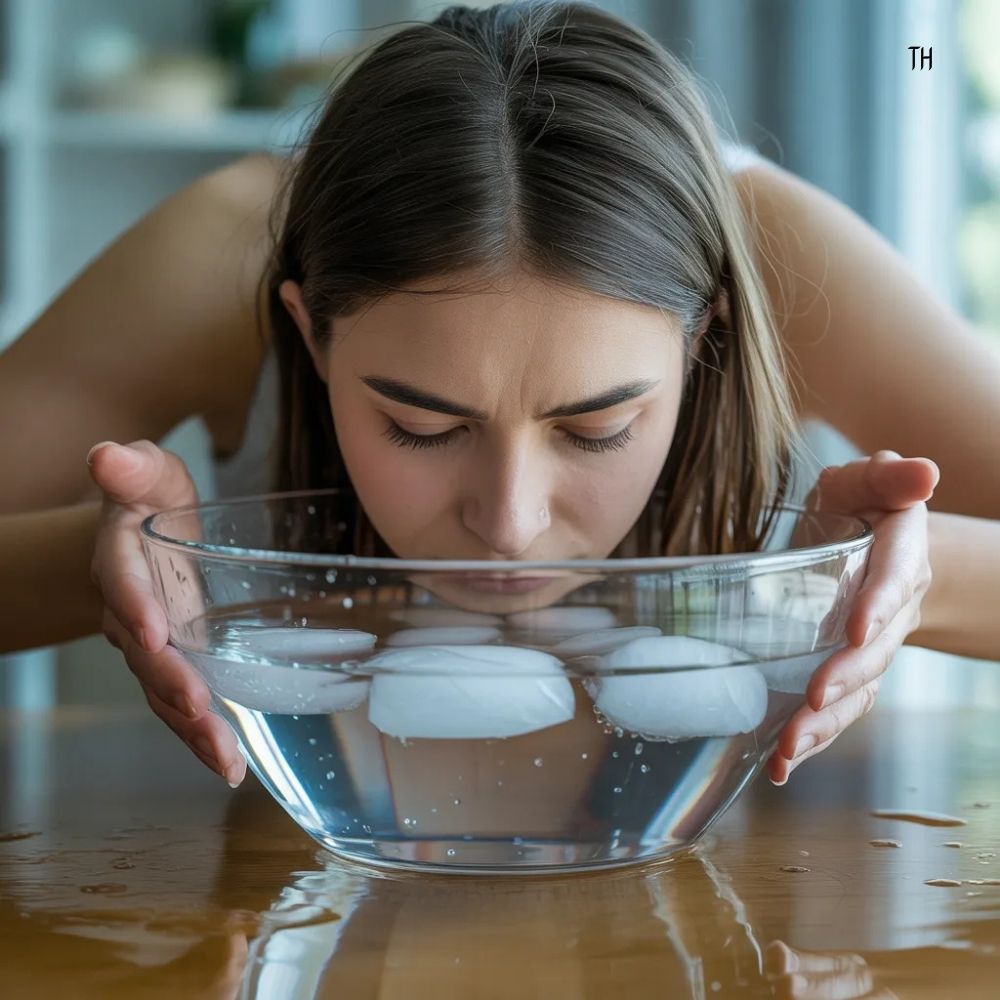
The traditional method is straightforward and effective when done correctly. Fill a bowl with cold water. Add enough ice to significantly lower the temperature, but do not overpack it to the point of discomfort. Allow the ice to cool the water evenly. Lean forward and submerge your face for ten to twenty seconds. Lift, breathe, and repeat two or three times.
If full immersion feels overwhelming, splash the face repeatedly with ice water or use a clean washcloth soaked in the bowl and press it gently onto the skin. The exposure should feel bracing, not painful. Two minutes is often enough to produce visible improvement.
Why It Feels So Dramatic
There is a psychological component to the ice water trick for morning puffiness that enhances its appeal. Cold exposure activates the sympathetic nervous system briefly, increasing alertness and sharpening awareness.
That shock of temperature interrupts grogginess. It feels energizing. The mind interprets the sensation as awakening, which amplifies the visual shift you see in the mirror.
Part of what makes the ice water method effective is sensory contrast. You feel awake, so you look awake.
When the Ice Water Trick Works Best
The ice water trick for morning puffiness is most effective when swelling is caused by:
- Mild fluid retention
• Short-term sleep disruption
• Late-night sodium intake
• Temporary hormonal shifts
• Seasonal allergies
It is less effective when puffiness is structural, such as fat pad displacement under the eyes or genetic under-eye bags.
Cold can temporarily tighten the appearance of those areas, but it cannot reposition tissue. Understanding this prevents unrealistic expectations.
A More Refined Version for Sensitive Skin
Not all skin tolerates intense cold equally. If you have rosacea, reactive capillaries, or chronic redness, extreme temperature shifts can aggravate sensitivity.
A modified version of the ice water trick for morning puffiness involves cool water rather than ice-cold water. Dip a soft cloth into chilled water and press it gently onto the face for thirty seconds at a time.
This provides vasoconstriction without triggering excessive rebound redness. Cold should reset, not inflame.
Ice Water Versus Ice Rollers Versus Cryo Tools
The beauty market has responded to the popularity of cold therapy with tools ranging from stainless steel rollers to electric cryotherapy devices.
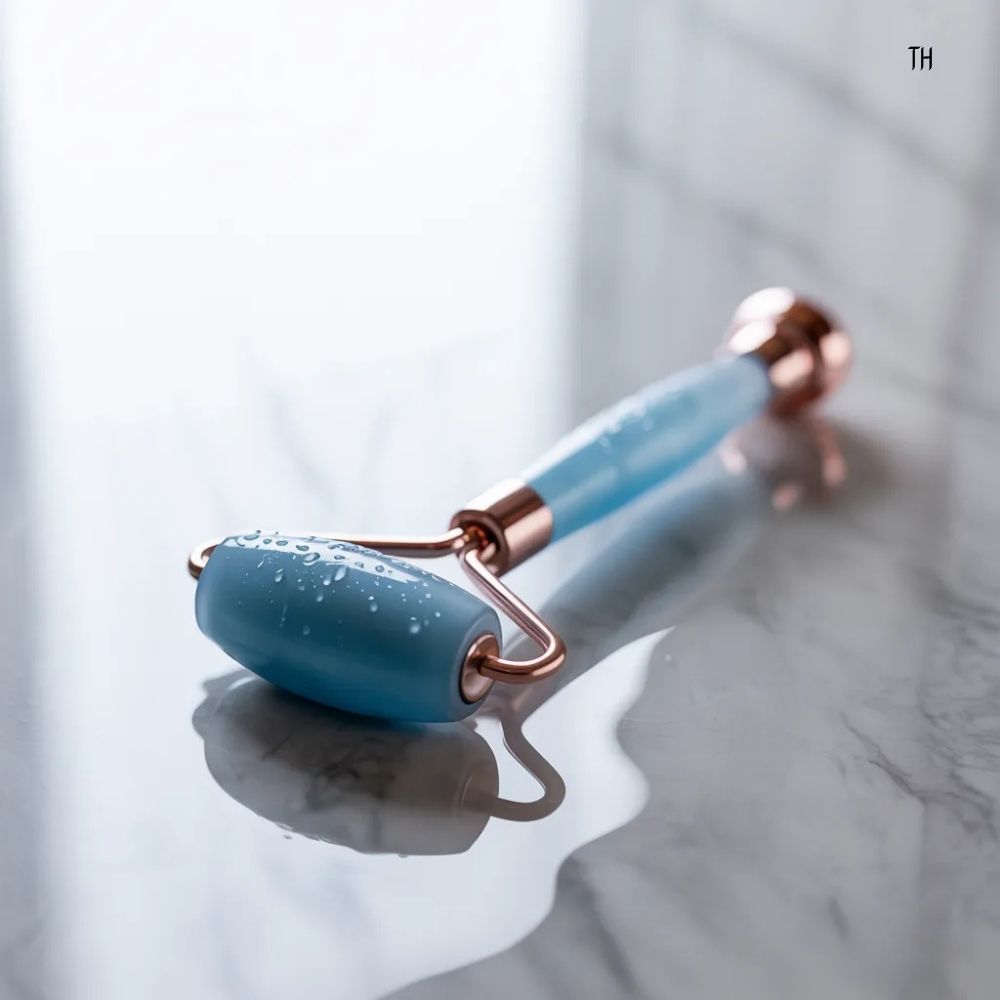
Ice rollers offer convenience and targeted application. They provide localized cold without full facial immersion. Stainless steel globes deliver a smooth, controlled glide that can feel luxurious.
The ice water trick for morning puffiness, however, provides uniform exposure. Every contour receives equal temperature change.
From a physiological standpoint, both methods operate on the same principle. The difference lies in experience. Ice water is direct and efficient. Tools are controlled and aesthetic. Effectiveness depends more on consistency than equipment.
Enhancing the Ice Water Method Strategically
While ice water alone reduces swelling, pairing it with intelligent follow-up steps improves longevity.
Lymphatic Drainage Massage
After cold exposure, apply a lightweight serum and perform gentle upward strokes along the jawline, cheekbones, and temples. Light pressure encourages lymphatic movement and supports continued fluid redistribution.
Caffeine Eye Products
Caffeine constricts blood vessels and complements cold therapy. Applying a caffeine-based eye serum after ice water can extend the de-puffing effect. Product recommendation: The Ordinary Caffeine Solution 5% + EGCG offers visible tightening without heaviness.
Barrier Support
Cold exposure can slightly dry the skin, especially in winter. Follow with a ceramide-rich moisturizer to maintain hydration.
Product recommendation: La Roche-Posay Toleriane Double Repair Moisturizer balances hydration without clogging pores. The goal is not layering complexity. It is reinforcing stability.
Frequency and Long-Term Use
The ice water trick for morning puffiness can be used several times per week without harm if your skin tolerates it.
Daily use is acceptable for many people, especially during allergy season or periods of high stress, but monitor your barrier. If skin begins to feel dry or irritated, reduce frequency. More exposure does not equal better results. Cold is a stimulus, not a cure.
When Puffiness Signals Something Deeper
Persistent swelling that does not improve with movement, hydration, or cold exposure may indicate:
- Chronic allergies
• Hormonal imbalance
• Sleep disorders
• Thyroid issues
• High sodium dietary patterns
If morning face swelling remains constant regardless of intervention, medical consultation may be appropriate. The ice water trick for morning puffiness is a tool, not a diagnostic.
Lifestyle Factors That Influence Puffiness
Cold exposure addresses symptoms. Lifestyle addresses cause. Hydration supports lymphatic flow. Movement in the morning accelerates redistribution. Reducing sodium intake before bed can minimize fluid retention.
Sleep quality profoundly influences cortisol and inflammation. Elevating the head slightly during sleep can reduce fluid accumulation in the face. Ice water works best within a system that supports circulation overall.
Why This Trick Has Survived Generations
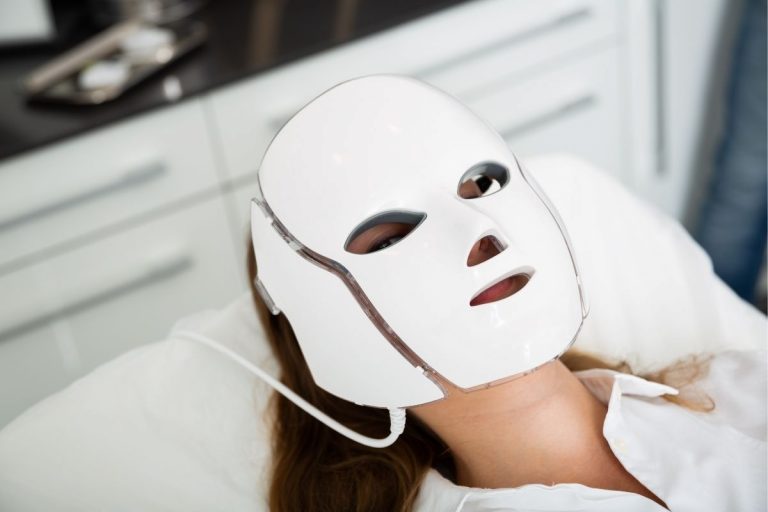
Before viral platforms, before cryo-facials and LED masks, women submerged their faces in cold water to reduce swelling. Its longevity is rooted in simplicity. It costs nothing. It requires no packaging. It produces visible change in minutes.
In a market saturated with devices and launches, the persistence of a bowl of cold water feels almost radical. It reminds us that not every solution needs branding.
Final Reflection
Morning puffiness is temporary. It reflects biology, not inadequacy. The ice water trick for morning puffiness works because it aligns with vascular response and fluid dynamics.
When used thoughtfully, it offers a quick, accessible reset that sharpens contours and refreshes the complexion without adding layers to your routine. It does not promise transformation. It provides adjustment.
And sometimes, the most sophisticated beauty habit is not acquiring another product, but understanding how your body already works. Cold resets. Circulation responds. Gravity returns. The mirror reflects something closer to equilibrium.