Beauty Burnout is Real and We Rarely Talk About It
There was a time when beauty felt exploratory and light. A new lipstick meant curiosity. A serum felt like progress. A morning routine offered structure and calm before the day began. For many people, beauty began as creativity and slowly became ritual.
Somewhere along the way, however, that ritual became heavier. Instead of inspiration, there is comparison. Instead of calm, there is maintenance. Instead of curiosity, there is pressure. What once felt expressive now sometimes feels like a performance. The experience has a name that more people are quietly recognizing: beauty burnout.
Beauty burnout does not mean losing interest in self-care. It describes the moment when beauty routines, product launches, and constant trends begin to feel overwhelming rather than empowering. It is subtle at first, then structural.
Understanding What Beauty Burnout Really Means
Beauty burnout is not about rejecting beauty culture entirely. It is about emotional and mental fatigue caused by constant exposure, constant consumption, and constant comparison. It occurs when the energy required to keep up begins to outweigh the joy beauty once provided.
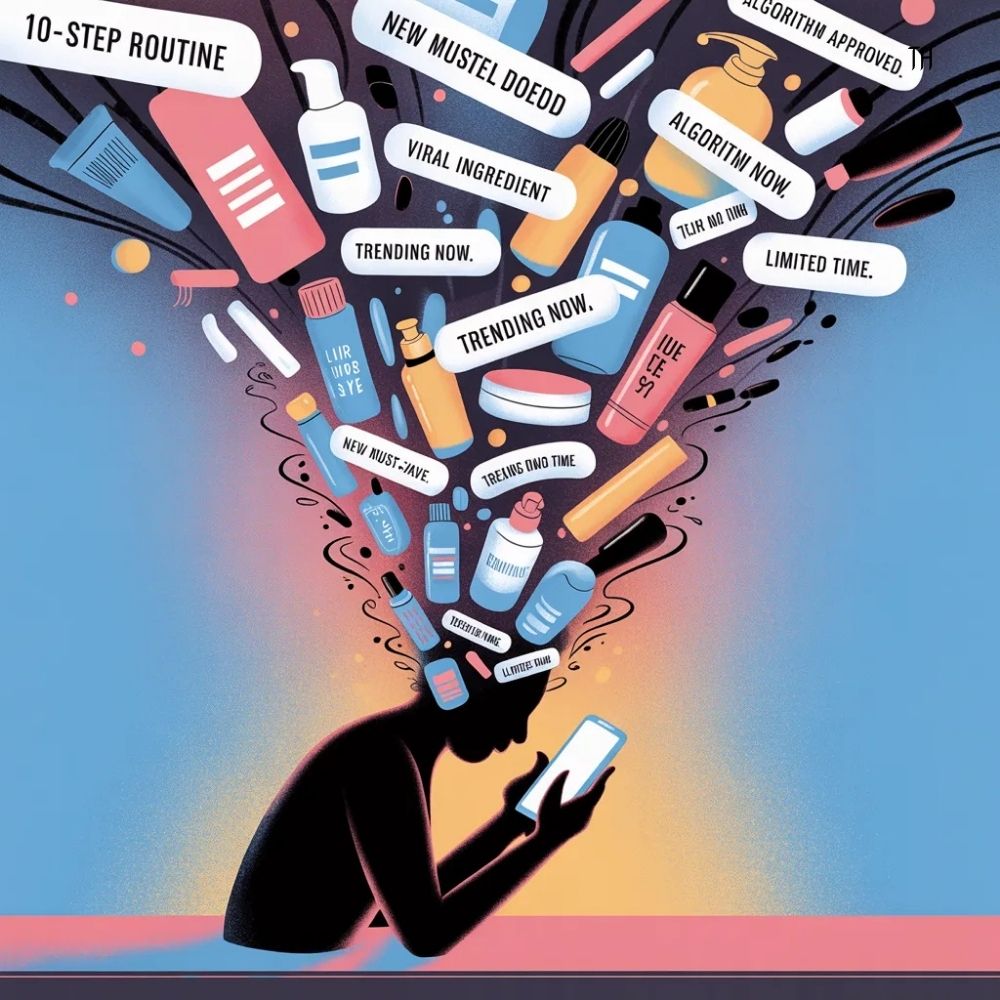
In today’s environment, beauty burnout can emerge from endless product recommendations, ingredient deep dives, aesthetic shifts, and algorithm-driven urgency. When every scroll introduces a new must-have or a new routine standard, maintaining clarity becomes difficult.
Instead of asking what enhances you, you may find yourself asking what you are missing. That question is often the beginning of beauty burnout.
The Acceleration of Beauty Culture
Modern beauty operates at remarkable speed. Trends rise and dissolve within weeks. Ingredients go from niche to essential overnight. Entire aesthetics emerge and then fade in a season.
Innovation is not inherently harmful. The problem arises when acceleration becomes relentless. Exposure multiplies. Comparison intensifies. The sense of completion disappears.
Beauty burnout grows quietly in that environment. The bathroom shelf fills, yet satisfaction feels temporary. You upgrade one product only to be introduced to another that promises even more. Over time, beauty can start to feel less like enhancement and more like upkeep.
When Skincare Becomes Overcomplicated
One of the clearest contributors to beauty burnout is routine expansion. What once involved cleansing and moisturizing now includes layering acids, alternating actives, cycling treatments, and monitoring ingredient interactions.
Knowledge is powerful, but excess is destabilizing. A routine that feels fragile and technical can stop feeling restorative. Instead of relaxation, there is vigilance.
Many cases of beauty burnout show up physically through irritated or sensitized skin. Over-exfoliation, frequent product changes, and aggressive layering often compromise the skin barrier. The result is paradoxical. In pursuit of improvement, the skin becomes less stable.
Makeup Fatigue and Performance Pressure
Makeup culture reflects a similar pattern. High-glam tutorials and complex techniques create impressive results, yet they can also create unrealistic daily expectations.
When beauty content consistently presents flawless finishes, it becomes easy to assume that such polish should be standard. The labor behind that polish remains invisible.
Beauty burnout in makeup often feels like reluctance. You may hesitate to begin your routine because it feels lengthy. You may feel obligated to contour or bake even when time is limited. The performance element begins to overshadow enjoyment.
The Financial Layer of Beauty Burnout
Beauty burnout is not purely emotional. It is frequently financial. Constant launches and limited editions encourage urgency. Social feeds blur the line between recommendation and marketing. Accumulation happens gradually and often rationally.
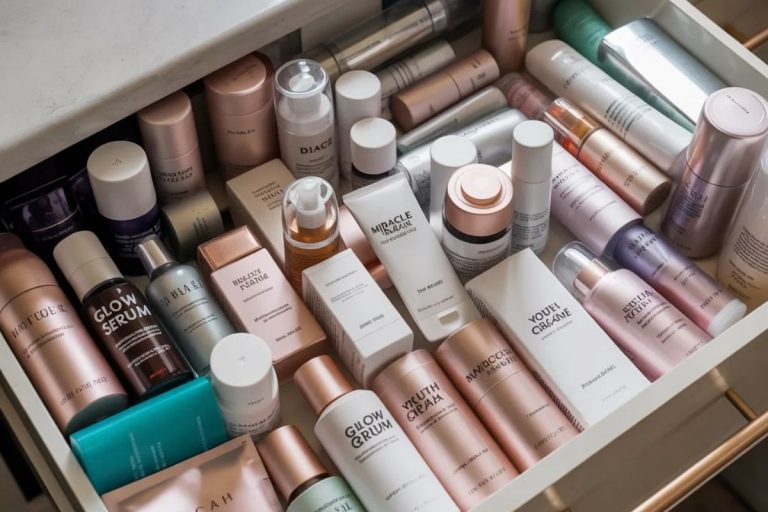
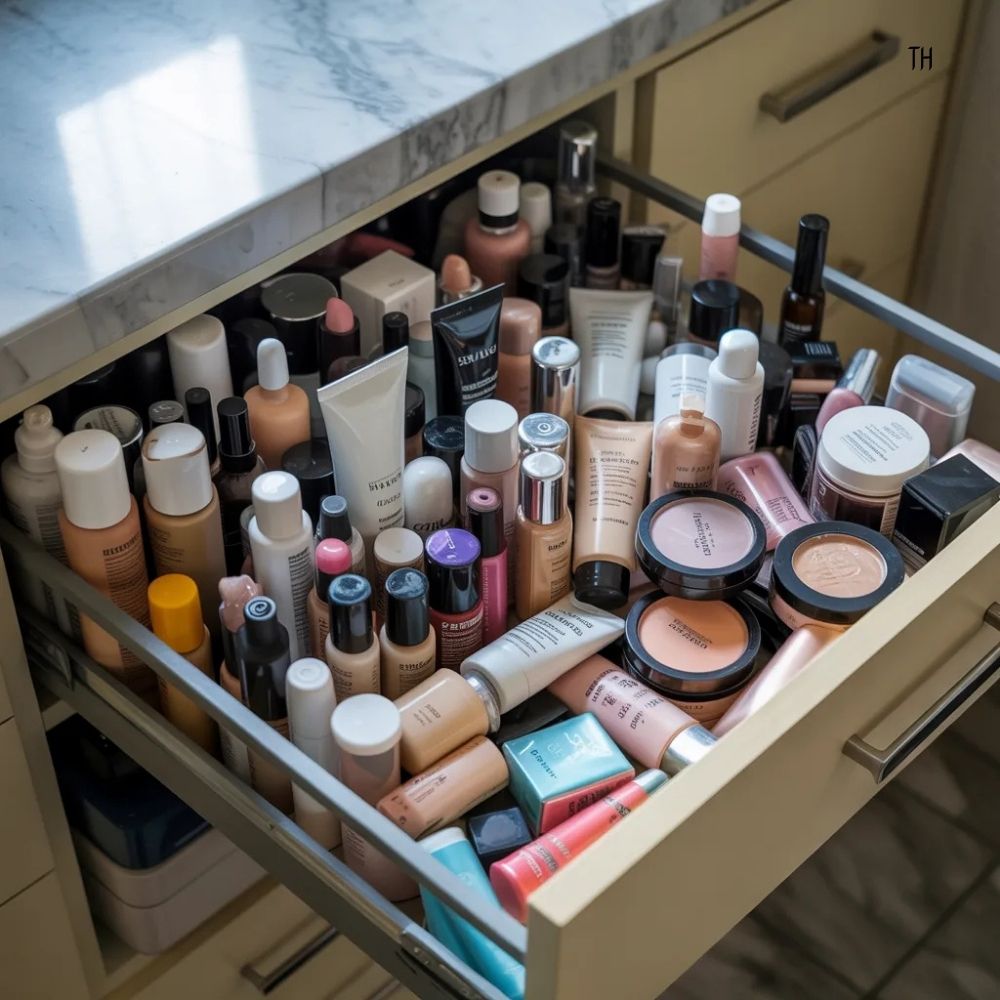
One serum seems useful. A backup seems practical. A trending blush feels harmless. Over time, however, the cost compounds. Drawers overflow with partially used products, and the excitement of acquisition fades.
Financial fatigue deepens beauty burnout because it adds guilt to exhaustion. When ownership exceeds usage, satisfaction decreases.
The Psychological Cost of Endless Improvement
Beauty culture intersects heavily with self-improvement culture. There is an implicit message that you should always refine something, whether it is your routine, your technique, or your wardrobe.
Improvement itself is not the issue. The problem arises when improvement becomes continuous and unanchored. If there is always another upgrade to pursue, contentment becomes temporary.
Beauty burnout often emerges from that endless loop. The finish line keeps shifting. Satisfaction remains conditional. At a certain point, constant upgrading stops feeling aspirational and starts feeling destabilizing.
Recognizing the Signs of Beauty Burnout
Beauty burnout rarely arrives dramatically. It tends to appear through subtle signals. You may feel overwhelmed organizing your products. You may scroll through launches with skepticism yet still feel pressured.
You may notice that your routine feels mechanical rather than calming. You may hesitate before beginning your evening skincare because it feels long.
You might even feel detached from the creativity that once attracted you to beauty in the first place. These signals are not failures. They are indicators that your relationship with beauty may need recalibration.
How to Recover From Beauty Burnout
Recovering from beauty burnout does not require abandoning beauty. It requires refinement. Begin with simplification. Identify which products consistently perform and which ones add redundancy. Remove overlap. Reduce unnecessary steps.
Reintroduce intention. Ask what you genuinely enjoy. Is it the quiet of a nighttime routine, the structure of a polished brow, or the confidence of even skin tone? Focus there.
Limit exposure where necessary. Curate your content consumption so it informs rather than overwhelms. Beauty should feel like inspiration, not pressure. When clarity returns, enjoyment often follows.
The Role of Repetition in Preventing Beauty Burnout
Repetition has been unfairly framed as stagnation, yet it can prevent beauty burnout. Wearing the same reliable foundation for months is not dull. It is stable. Returning to a trusted moisturizer reduces decision fatigue. Building a capsule makeup bag removes uncertainty.
Consistency reduces cognitive load. Reduced cognitive load protects energy. Energy preservation counters burnout. By allowing certain products to become staples rather than experiments, you create a system that supports you instead of draining you.
A Cultural Shift Toward Restraint
There are signs that the industry itself is responding to beauty burnout. Conversations around de-influencing beauty are increasing. Minimal routines are gaining attention. Skin barrier awareness continues to grow.
Consumers are becoming more selective. Selectivity is not anti-beauty. It is anti-excess. Restraint sharpens creativity rather than limiting it. When fewer products compete for attention, the ones you choose matter more.
Reclaiming Beauty Without Pressure
Ultimately, beauty burnout is about pace. When pace exceeds comfort, fatigue follows. Reclaiming beauty involves slowing down. It involves filtering influence through personal preference rather than reacting to every trend. It involves recognizing that not every launch is meant for you.
When beauty aligns with your real schedule and real priorities, it regains its softness. It becomes ritual again rather than responsibility.
Final Thoughts on Beauty Burnout
Beauty burnout is more common than we admit, largely because beauty is framed as something that should always feel joyful. Yet even joyful practices can become exhausting when layered with pressure and acceleration.
If beauty has started to feel heavy rather than light, that feeling deserves attention. Simplifying does not mean disengaging. It means recalibrating.
When you reduce noise, remove redundancy, and choose intention over urgency, beauty begins to feel beautiful again. And sometimes, the most effective way to prevent beauty burnout is not to add something new, but to gently let something go.