When Less Becomes the Smartest Beauty Strategy
There was a time when beauty content felt expansive in an exciting way. A new serum launched every week. A new foundation promised a finish no one had seen before. A new routine diagram appeared with twelve steps that seemed to signal dedication rather than excess.
The assumption was simple: more products meant better results, and more effort meant better skin. That assumption is quietly dissolving.
Across editorial spaces, dermatology offices, and increasingly thoughtful consumer conversations, a different philosophy is emerging. It does not shout. It does not rely on viral sounds or algorithmic urgency. It is rooted in restraint.
The movement commonly referred to as de-influencing beauty reflects a broader cultural shift toward strategic minimalism. The question is no longer “What else should I add?” but rather “What can I remove without losing effectiveness?” Less is no longer laziness. Less is becoming intelligent.
The Fatigue Behind the Shift
To understand why de-influencing beauty is gaining traction, it helps to examine what preceded it. For years, beauty consumption has operated on acceleration.
Social platforms reward novelty, and novelty encourages accumulation. When every week introduces a new must-have, even the most disciplined consumer begins to feel behind.
This acceleration has consequences. Skincare routines expand beyond what skin actually requires. Makeup drawers fill with overlapping shades. Product testing becomes constant experimentation rather than intentional selection. Many consumers now report not excitement, but exhaustion.
Beauty burnout is not dramatic, but it is real. It manifests as crowded bathroom shelves, irritated skin from over-exfoliation, and the quiet anxiety of feeling perpetually unfinished. De-influencing beauty emerges as a response to that fatigue. It reframes beauty from accumulation to calibration.
What De-Influencing Actually Means
De-influencing does not mean rejecting beauty. It means filtering it. The premise is not that products are unnecessary. It is that not all products are necessary for you. The shift is subtle but powerful.
Instead of reacting to every launch, consumers begin evaluating function. Instead of layering multiple actives because a routine suggests it, they ask whether each ingredient serves a defined purpose.
Strategic minimalism does not reduce care. It refines it. When you remove redundant steps, you reduce irritation risk. When you limit makeup to products that consistently perform, application becomes efficient rather than experimental.
When your wardrobe contains pieces that coordinate naturally, dressing becomes intuitive. Less becomes a system rather than a sacrifice.
The Skin Barrier Wake-Up Call
One of the clearest catalysts for de-influencing beauty has been increased awareness of the skin barrier. Dermatologists have spent years emphasizing the importance of maintaining barrier integrity, yet online trends often encouraged aggressive exfoliation and active stacking.
The results were predictable. Over-sensitized skin, chronic redness, and confusion about why expensive products were not delivering promised results. As barrier repair became a central conversation, many consumers realized that their expanded routines were undermining the very outcomes they sought.
The realization was not that skincare does not work. It was that overcomplication disrupts stability. When a simple cleanser, targeted treatment, moisturizer, and sunscreen meet your needs, adding additional acids and serums may not improve performance.
Makeup Without the Performance
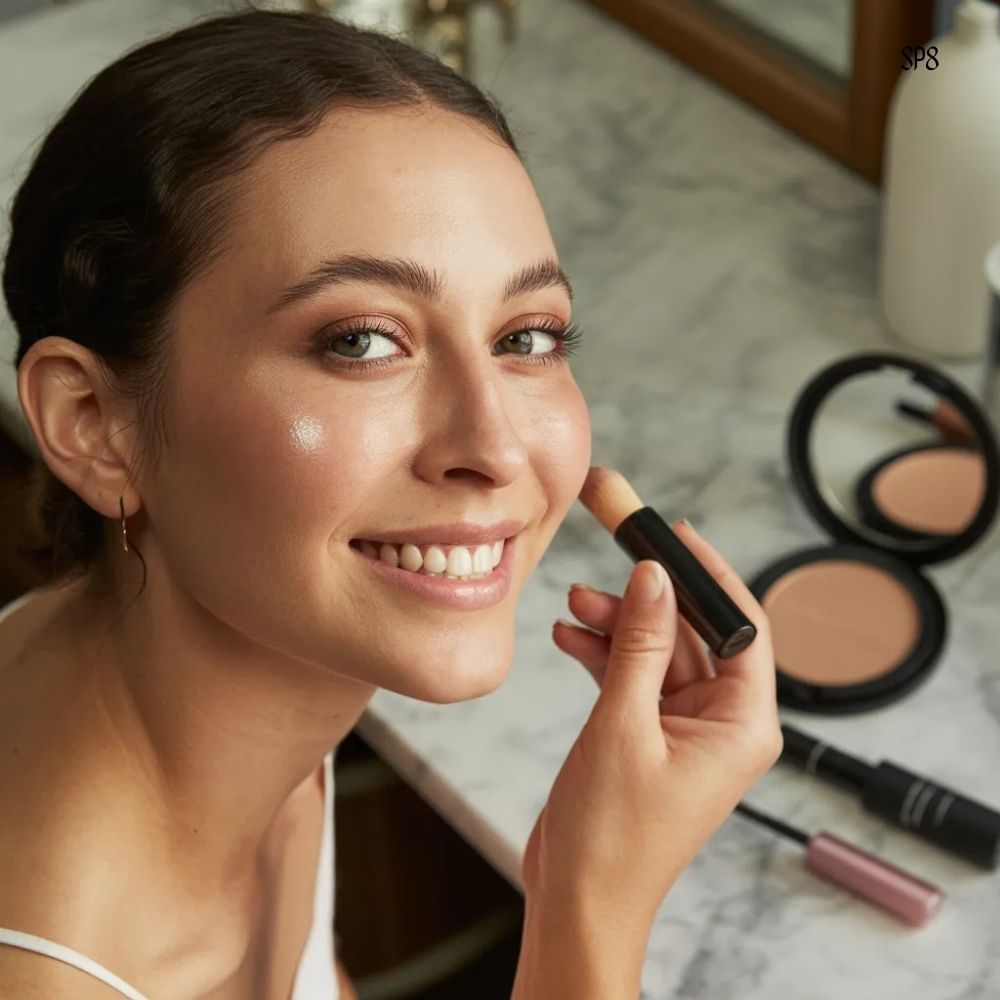
The same evolution is visible in makeup culture. Full-glam routines once dominated social feeds, requiring contour, baking, multiple eyeshadow layers, and extended blending sessions. While artistry remains respected, daily wear is trending toward efficiency.
Consumers increasingly ask whether a product integrates smoothly into their schedule. A foundation that photographs beautifully but oxidizes under office lighting loses appeal. A lipstick that requires constant reapplication becomes impractical.
De-influencing beauty encourages evaluating makeup based on repeatability. Can you recreate this look on a regular Tuesday without dedicating forty minutes to precision? Does it enhance your features without requiring constant monitoring?
Financial Awareness and Strategic Spending
Another factor contributing to de-influencing beauty is financial consciousness. Inflation, subscription fatigue, and general economic uncertainty have sharpened spending decisions. Consumers are more aware of cost-per-use than ever before.
Strategic minimalism invites calculating value differently. A well-formulated serum used consistently for six months may outperform three experimental serums rotated impulsively. A single high-quality blazer may replace five trend-driven alternatives.
This does not necessarily mean spending less, but it means spending deliberately. The strategy lies in alignment between purchase and usage.
The Psychological Comfort of Simplification
There is also a psychological dimension to de-influencing beauty. Simplified systems reduce cognitive load. When your skincare routine contains five consistent steps, decision-making becomes automatic. When your wardrobe follows a defined palette, outfit assembly requires less negotiation.
Decision fatigue quietly drains energy throughout the day. Beauty routines, when overcomplicated, contribute to that fatigue. Strategic reduction restores clarity.
Clarity, in turn, creates confidence. When you understand why each product exists in your routine, you apply it with intention rather than hope.
A Practical Example of Strategic Minimalism
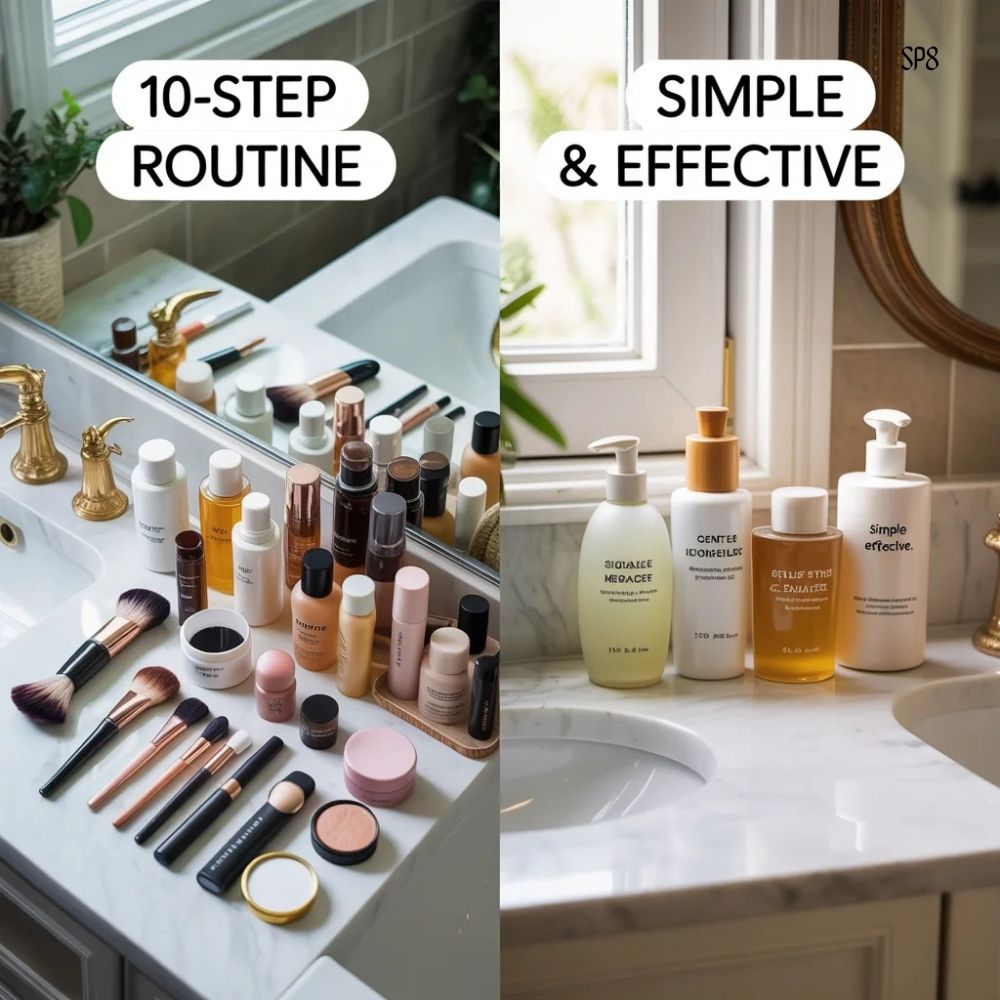
Consider someone who previously followed a ten-step evening skincare routine including double cleansing, two exfoliating acids, a retinol, essence, multiple serums, sheet masks, and occlusive layers. The results included occasional glow but also persistent sensitivity.
After evaluating necessity, the routine is recalibrated to a gentle cleanser, a single treatment rotated appropriately, a moisturizer suited to skin type, and sunscreen in the morning. Within weeks, irritation decreases and consistency improves.
The difference lies not in effort, but in alignment. This is de-influencing beauty in practice.
The Cultural Return to Texture and Realness
Visual culture is also evolving. The era of hyper-filtered, poreless perfection is gradually giving way to more realistic representation. Texture, freckles, and natural shine are appearing more frequently in editorial photography.
As visual standards normalize authenticity, consumer behavior follows. There is less pressure to conceal every imperfection and more emphasis on skin health over optical illusion. When expectations recalibrate, product accumulation becomes less urgent.
How to Adopt a Strategic Approach Without Overcorrecting
It is possible to misinterpret de-influencing beauty as a call for extreme austerity. That interpretation misses the nuance. Strategic minimalism does not require eliminating joy or creativity. It requires questioning redundancy.
A practical method involves auditing your routine with three questions:
- Does this product serve a clear function?
- Does it improve results measurably?
- Would removing it reduce performance significantly?
If the answer to the final question is no, the product may be decorative rather than essential. The same audit can apply to makeup and wardrobe decisions.
The Future of Beauty Consumption
As consumers grow more informed, beauty culture is likely to become less about accumulation and more about optimization. Brands may respond by emphasizing multifunctional formulations and transparency rather than sheer volume of releases.
De-influencing beauty reflects a broader cultural desire for control in an environment saturated with persuasion. When you choose fewer, well-considered products, you reclaim agency from the algorithm.
The strategy is not about rejecting influence entirely. It is about filtering influence through personal clarity.
Why Less Feels Luxurious Again
Historically, luxury has often been associated with excess. However, in modern contexts, luxury increasingly aligns with restraint. A clean bathroom counter, a curated makeup bag, and a wardrobe that functions seamlessly signal refinement.
Less feels intentional. When routines are streamlined, attention shifts from maintenance to enjoyment. You are no longer managing clutter but engaging with purpose.
Final Reflection
De-influencing beauty is not a trend in the traditional sense. It is a recalibration. It recognizes that accumulation does not equal improvement and that clarity often outperforms novelty.
When less becomes strategic, beauty routines feel lighter yet more effective. Confidence grows not from the number of products owned, but from understanding why each one is present.
In a culture that rewards constant addition, choosing thoughtful reduction becomes quietly radical. And in that reduction, beauty regains its elegance.