One Small Setting Powder Change That Made My Makeup Look More Like Skin
One morning not long ago, the bathroom mirror delivered a rude surprise. Base makeup had gone on beautifully, but the moment setting powder entered the routine, everything shifted in the wrong direction.
What should have looked smooth and finished suddenly looked dry, flat, and strangely chalky. Pores felt exaggerated. Texture appeared out of nowhere. It was the kind of result that makes you question whether a product has secretly turned on you overnight.
That frustration led to closer attention. Different brushes were tested. Different powders came and went. Skipping powder altogether was briefly considered, followed by pretending it wasn’t necessary. Nothing felt consistent, and nothing quite solved the problem.
Eventually, the approach changed. Instead of adding more steps, things were simplified. Movements got smaller. Application slowed down. The process was watched more closely, especially after a few very honest evenings with makeup wipes and a fresh start.
What finally worked wasn’t dramatic or complicated. It was barely even a method. Just a tiny adjustment that changed how powder settled on the skin. Since then, the powder step has stopped feeling risky and started feeling reliable, delivering the soft, natural finish that always felt just out of reach before.
The Powder Problem No One Warns You About
Here’s the truth that took me far too long to admit: most of us don’t have a powder problem. We have a distribution problem.
Powder is actually the friend who shows up on time and brings structure to your look. The issue is that we tend to apply it with the enthusiasm of someone dusting flour on a baking counter. Too much pressure, too much product, too much commitment.
I used to think the solution was to buy fancier powders, but every time I changed formulas, the outcome stayed exactly the same: slightly dry, slightly flat, slightly more textured than my real skin. That’s when I realized the technique mattered far more than the brand.
This discovery came from a moment when I lightly tapped my powder brush on the back of my hand and noticed how differently the powder behaved when I barely touched the skin.
It melted. It softened. It blurred without announcing itself. That tiny visual unlocked everything. My skin didn’t need more powder. It needed gentler powder.
The “Press and Release” Technique That Changed My Finish
This method is so simple that when I explain it to friends, they always say, “Wait… that’s it?” And yes, it really is that uncomplicated.
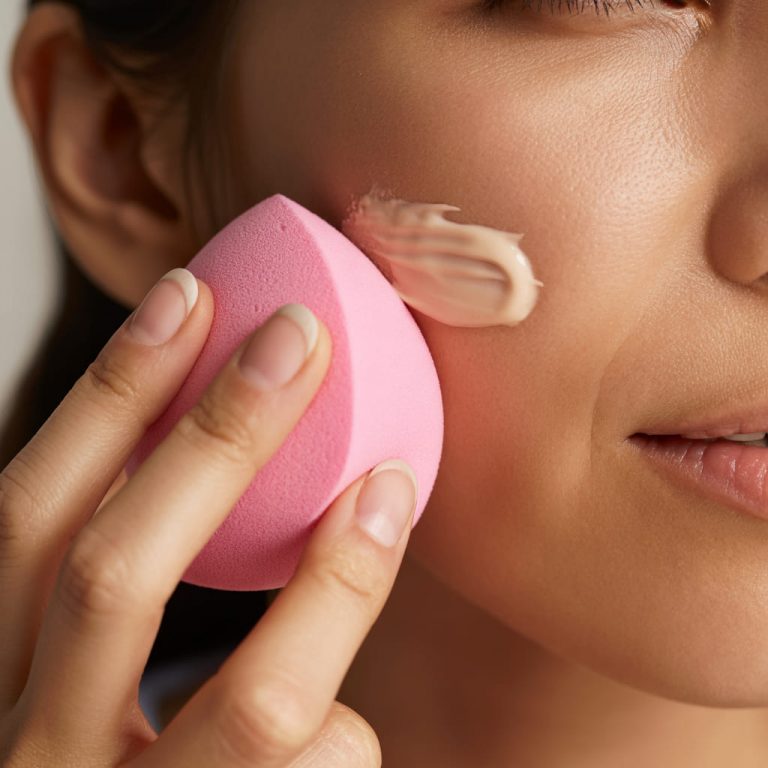
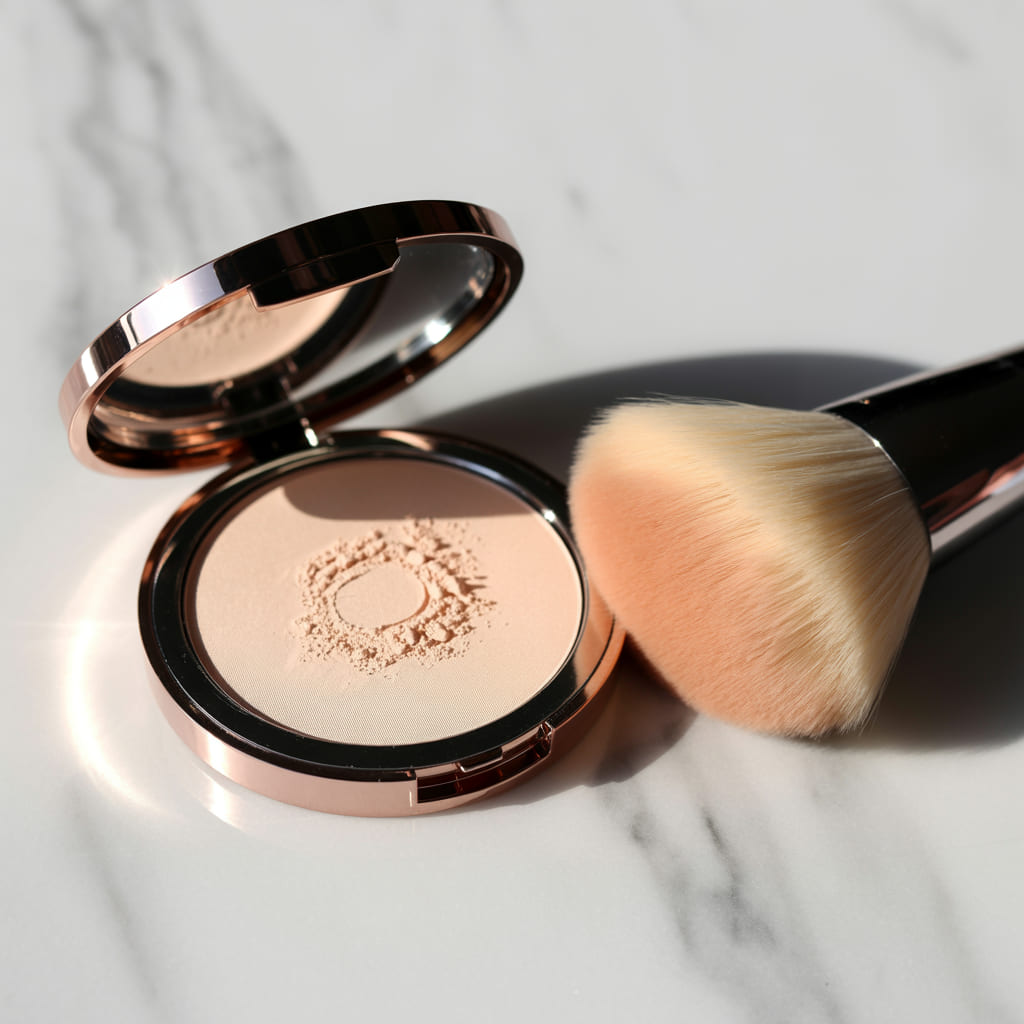
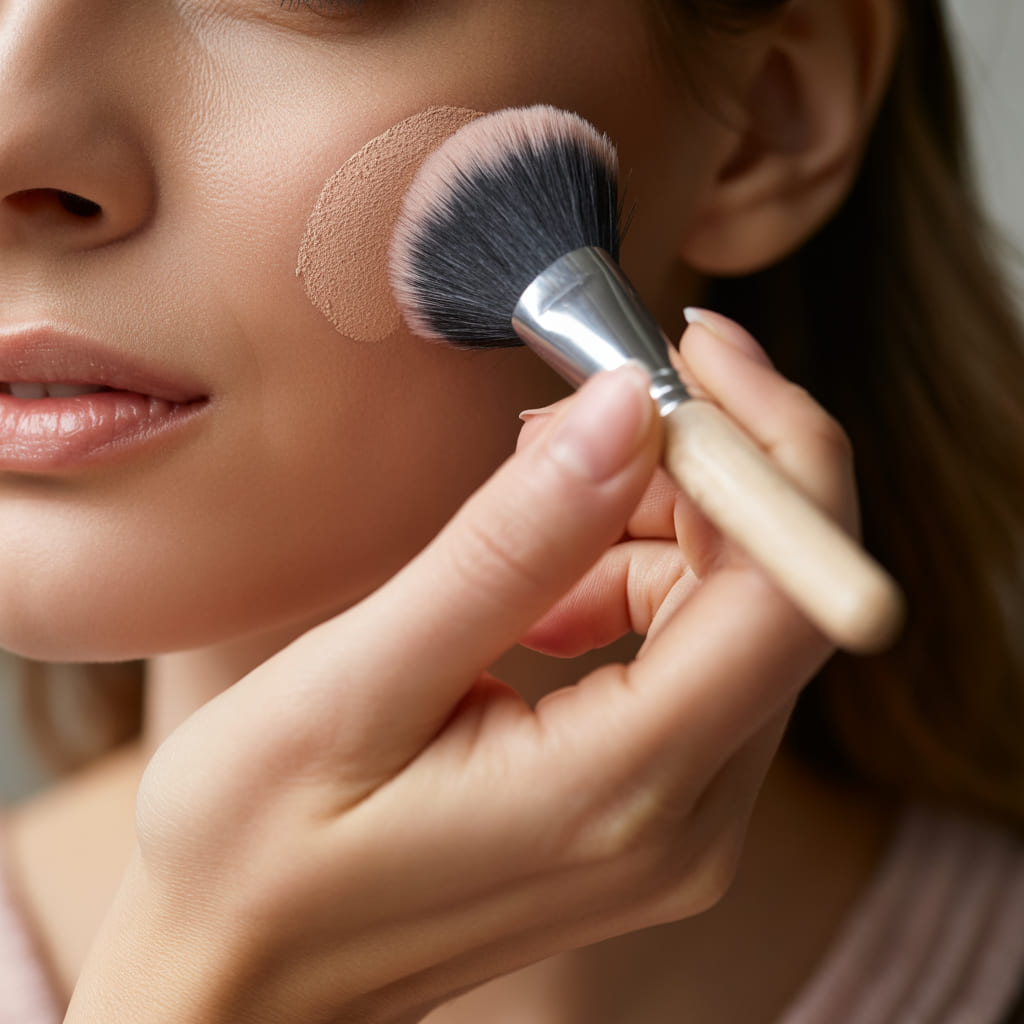
Instead of sweeping powder across my face, which tends to drag product around and emphasizes texture, I use a soft press-and-release motion that lightly stamps the powder onto the skin.
Not rubbing. Not swirling. Not buffing like I’m trying to win a prize for enthusiasm. Just tiny, deliberate pats.
Press. Lift. Move. Press again.
The difference this makes is borderline magical. The powder blends seamlessly into the base instead of sitting on top of it, and the finish becomes a soft, believable smoothness instead of a powdery mask.
The best part is that it works with any powder. Loose, pressed, translucent, tinted, expensive, drugstore, whatever your budget or preference may be.
How I Discovered This by Accident (My Favorite Kind of Beauty Lesson)
The discovery happened on a day when I was in a rush and didn’t have time to grab my usual fluffy brush. The only tool within reach was a small, flat brush I normally use for blending eyeshadow edges.
I dipped it into my powder, fully expecting disaster, and lightly tapped it under my eyes because I didn’t have the energy to do anything else.
What happened next startled me. The section I tapped looked smooth. The powder had fused with the concealer like they had agreed to coexist peacefully for once.
I immediately tapped another section. Same result. Then I tested my forehead, chin, around my nose. Everything looked softened. Everything looked like my skin but slightly more refined.
It was the finish I kept seeing on people online and assuming required both expensive products and perfect lighting. That night I tried the method again intentionally, and it worked exactly the same way. And from that moment forward, I knew I had found my solution.
Why This Method Looks More Natural Than Anything Else I’ve Tried
The magic of press-and-release comes from three quiet, almost invisible shifts that happen on the skin.
First, the powder adheres evenly instead of clumping. Gentle pressure helps the powder settle into the base without disturbing whatever you already blended so carefully.
Second, the technique prevents the over-application that sweeping motions create. When you sweep powder, you pick up more product than you need and deposit it unevenly across the face. When you press powder, the brush or puff releases only what the skin can handle.
Third, the finish becomes diffused rather than matte. You can still see the hydration peeking through, the natural texture of your skin, the glow you created with your skincare. It never looks flat. It never looks stiff. It just looks like your makeup suddenly grew a filter.
These tiny changes add up to a result that feels believable instead of “done.”
Powder Doesn’t Have To Be The Villain
If your powder has ever betrayed you, flattened your face, emphasized your pores, or made your makeup look older than you feel, try treating it with a lighter touch.
Instead of sweeping, press. Instead of buffing, place. Instead of thinking of powder as the final, dramatic step, think of it as a soft punctuation mark. Gentle, necessary, and meant to support the entire sentence, not dominate it.
This simple habit changed the finish of my makeup more than any new product I’ve purchased in the last year. And the best part is that it was always within reach. I just needed to pay attention long enough to discover it.
Your most natural finish might not require a new powder at all. It might only require a new touch.